

Paying A$5,000 more than necessary for a PowerFlex 755 or Altivar 630 just to satisfy an authorised distributor’s markup is a direct hit to your facility’s ROI. You already know that miscalculating the difference between Normal Duty and Heavy Duty ratings leads to premature IGBT failure and expensive downtime. This technical vfd selection guide for pumps provides the engineering framework to master torque characteristics and Australian regulatory compliance while slashing procurement costs. We’ll show you how to ensure long-term motor protection using specific technical parameters rather than just following manufacturer sales brochures.
Instrodirect.com.au isn’t locked into one brand, which means we provide unbiased access to the world’s best hardware at lower prices. We’ll preview how to apply the Affinity Laws to reduce your energy spend by up to 50% and explain how our parallel importing model saves you over 40% from manufacture RRP. This guide breaks down the technical nuances of sourcing genuine Rockwell, Siemens, and Schneider parts without the typical Australian supply chain delays. You’ll gain the specific data needed to bypass local markups and secure the exact specifications your pumping system requires for 2026 and beyond.
Key Takeaways
- Master the physics of Affinity Laws and the technical distinction between Normal Duty (ND) and Heavy Duty (HD) ratings to ensure precise motor sizing.
- Ensure Australian regulatory compliance by selecting appropriate IP-rated enclosures and meeting AS/NZS 61000 harmonic mitigation standards for the local grid.
- Utilise this vfd selection guide for pumps to evaluate PowerFlex, Altivar, and Sinamics hardware—InstroDirect is not locked into one brand, ensuring the best technical fit for your site.
- SAVE OVER 40% FROM MANUFACTURER RRP by sourcing through Instrodirect.com.au, leveraging parallel importing to maximise your automation budget.
- Optimise system reliability and ROI by comparing communication protocols like EtherNet/IP and PROFINET across multiple leading manufacturers.
VFD Fundamentals for Pumping: Torque, Affinity Laws, and Efficiency
Understanding the distinction between Variable Frequency Drives (VFD) and Variable Speed Drives (VSD) is the first step in this vfd selection guide for pumps. In the Australian market, VSD is the umbrella term for any device that varies motor speed, while a VFD specifically adjusts the frequency and voltage of the AC power supply. InstroDirect supplies all major brands, including Allen-Bradley and Siemens, at prices often 40% below manufacturer RRP. We aren’t locked into one brand. This independence ensures you get the right hardware for your specific flow requirements without being forced into a single ecosystem.
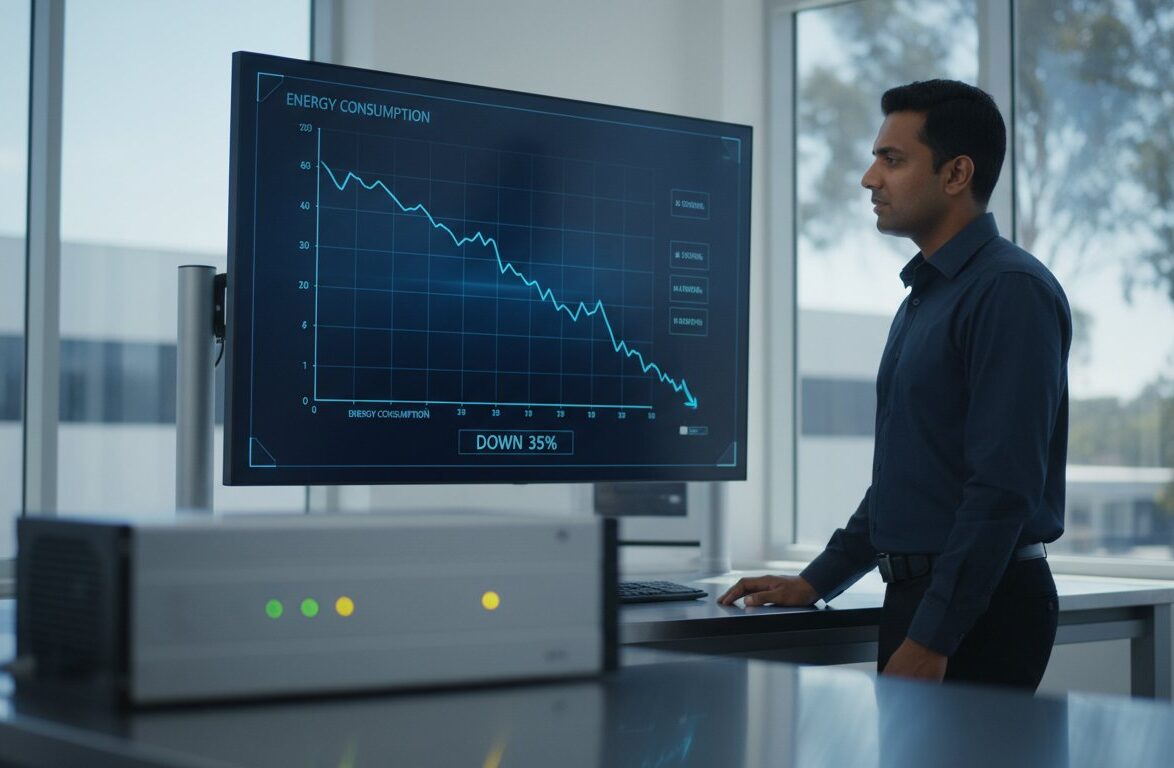
The core of pump optimization lies in the Affinity Laws. These laws govern the relationship between speed, flow, head, and power consumption. When you reduce the speed of a centrifugal pump, the impact on your energy bill is non-linear. A 20% reduction in pump speed can result in a theoretical power reduction of nearly 50% based on the cube law of affinity. For an industrial site running 24/7, this translates to thousands of A$ in annual savings. Use our VSD ROI calculator to see the exact impact on your operational budget.
Variable Torque vs. Constant Torque Applications
Centrifugal pumps are variable torque applications. The torque required by the pump increases as the square of the speed. This allows for more aggressive energy-saving profiles at lower frequencies. In contrast, positive displacement pumps require constant torque across the entire speed range. Sizing a VFD for constant torque requires careful consideration of heat dissipation. At low speeds, the motor’s internal fan is less effective, often requiring an external cooling source or a derated drive. InstroDirect stocks a wide range of Allen-Bradley PowerFlex drives designed to handle both torque profiles efficiently.
Efficiency Metrics and IE Motor Class Compatibility
Matching your drive to IE3 and IE4 high-efficiency motors is essential for maximizing Total Cost of Ownership (TCO). The VFD switching frequency must be tuned to the motor’s insulation class. Higher switching frequencies reduce audible noise but can lead to increased voltage spikes and heat. Technical engineers should prioritize drives with robust thermal management for the 40°C+ ambient temperatures common in Australian installations. Don’t pay the “local distributor tax.” Parallel importing through InstroDirect provides the same high-spec hardware at lower pricing. If you can’t find the specific drive you need, ring us directly. We are here to help you source the exact technical solution for your automation project.
Technical Sizing: Load Profiles and Overload Requirements
Sizing a VFD by motor nameplate kilowatts (kW) alone is a common engineering error. To ensure reliability, engineers must match the VFD continuous output current rating to the motor Full Load Amps (FLA). This vfd selection guide for pumps emphasizes that current, not power, drives the thermal limits of the inverter bridge. Australian industrial sites typically operate on 415V 3-phase power, but voltage fluctuations in remote regions can increase current draw. Always size for the maximum FLA listed on the nameplate.
The “Duty” rating defines the VFD’s ability to handle thermal stress during startup. Centrifugal pumps generally follow a variable torque curve, while positive displacement pumps require constant torque. Selecting the wrong duty class leads to frequent overcurrent faults and shortened component life. InstroDirect provides technical support to help you navigate these specifications across multiple brands. We aren’t locked into one manufacturer, which means we recommend the drive that actually fits your load profile.
Australian conditions require specific de-rating calculations. Ambient temperatures in locations like the Pilbara or Western Queensland often exceed 45°C. Most VFDs are rated for 40°C; expect a 2% current de-rating for every degree above this limit. Altitude also matters. For sites above 1000 metres, air density decreases, reducing the cooling efficiency of the VFD heat sink. If your switchroom lacks climate control, oversizing the VFD frame is the most cost-effective way to prevent thermal tripping.
Sizing for Centrifugal Pumping Systems
Standard water transfer and HVAC pumps use Normal Duty (ND) ratings. These drives offer 110% overload capacity for 60 seconds. This is sufficient for variable torque loads where torque requirements drop significantly at lower speeds. For high-inertia impellers or systems with rapid ramp-up requirements, consider adding braking resistors to manage regenerative energy. Oversizing the VFD by 15% in variable head pressure scenarios prevents nuisance trips during flow surges. Browse our full range of industrial VFDs and PLCs to find ND-rated solutions for your facility.
Sizing for Positive Displacement (PD) and Slurry Pumps
Heavy Duty (HD) sizing is mandatory for reciprocating, rotary lobe, or slurry pumps. These applications require 150% overload for 60 seconds to overcome high breakaway torque. In mining or wastewater, slurry can settle in the pipe, demanding massive torque at zero speed. Use sensorless vector control to maintain accuracy without an encoder. This technical approach ensures the motor doesn’t stall when viscosity increases. InstroDirect stocks HD-rated drives from various global brands to suit these high-demand environments.
Voltage and Phase Considerations
While 415V 3-phase is the standard for Australian industry, rural pumping often relies on single-phase 240V supply. We offer VFD solutions that convert single-phase input to 3-phase output, allowing the use of more efficient 3-phase motors in remote areas. Note that carrier frequency affects performance. Higher frequencies (above 8kHz) reduce motor noise but increase VFD heat and electrical interference. For long cable runs to bore pumps, keep carrier frequencies at 2kHz to 4kHz to avoid insulation breakdown from reflected waves. If you need assistance with specific site requirements, contact our technical team for a direct consultation.

Australian Site Conditions: Protection and Compliance
Engineering a pump system in Australia requires more than just matching torque curves. Local environmental extremes and strict AS/NZS standards dictate hardware choices. InstroDirect acts as your primary sales arm, providing the technical depth needed to navigate these requirements without being locked into a single manufacturer. Whether you need an Allen-Bradley PowerFlex or a Schneider Altivar, we source the right tech at lower prices through parallel importing. This vfd selection guide for pumps focuses on the ruggedized specs required for WA mining sites, QLD coastal plants, and remote agricultural bores.
Enclosure Ratings for the Australian Climate
Thermal management is the leading cause of VFD failure in Australian installations. Standard IP20 drives are suitable for climate-controlled switchrooms, but they fail quickly in high-ambient environments like the Pilbara where temperatures exceed 45°C. For these sites, you must factor in heat dissipation and active cooling. We recommend derating the drive or using external heat sinks. For outdoor wash-down areas or dusty grain handling facilities, IP66 enclosures are mandatory. They provide total protection against dust ingress and high-pressure water jets.
- IP20: Use only in clean, ventilated MCC cabinets.
- IP54: Minimum standard for general industrial sheds with moderate dust.
- IP66: Essential for outdoor mounting and heavy wash-down zones.
- Material Choice: Use 316 stainless steel for corrosive coastal environments to prevent pit corrosion. Polycarbonate is a cost-effective alternative for UV-exposed sites.
InstroDirect offers a wider selection of enclosure options than traditional distributors. We help you find the specific IP rating that fits your budget and site conditions. Check our online shop for current deals on ruggedized hardware.
Electrical Integrity and Motor Protection
Australian grid compliance is non-negotiable. Your installation must meet AS/NZS 61000 standards for harmonic distortion to prevent penalties from utility providers. Most industrial sites require “C3” RFI filters, while “C2” filters are necessary if the pump is near commercial or residential zones. These filters mitigate electromagnetic interference that disrupts local communications and sensitive instrumentation.
Reflected wave phenomena pose a major threat to remote bore pumps. When cable runs exceed 50 metres, the voltage pulses from the VFD can double at the motor terminals, reaching levels over 1,600V. This destroys winding insulation. To prevent this, engineers must specify dV/dt filters for runs between 50 and 100 metres. If the cable exceeds 100 metres, a sine-wave filter is required to convert the PWM output into a smooth voltage curve. Protection doesn’t stop at the cable. You should install shaft grounding rings and insulated bearings to stop EDM (Electrical Discharge Machining) currents from pitting the motor races. For safety compliance, ensure the drive includes Safe Torque Off (STO) rated to SIL3 per AS 4024.1. You save more by sourcing these high-spec drives through instrodirect.com.au where we prioritize technical performance over brand loyalty.
Multi-Brand Comparison: PowerFlex, Altivar, and Sinamics
Selecting the right hardware is a critical step in any vfd selection guide for pumps. Most Australian distributors are locked into single-brand contracts. They’ll push one product regardless of your specific technical needs. InstroDirect operates differently. We aren’t tied to any manufacturer. This independence allows us to source the best technical fit at the lowest price point. We use parallel importing to bypass traditional Australian markups. This model often results in savings of 30% to 45% compared to manufacturer RRP. You get the same genuine hardware without the “Australia Tax.”
Communication protocols dictate your system architecture. EtherNet/IP is the standard for Rockwell environments, offering seamless integration with Logix controllers. PROFINET provides high-speed, deterministic data exchange for Siemens-heavy plants. Modbus TCP remains the most versatile option for Schneider systems and legacy infrastructure. Software ecosystems also vary significantly:
- Studio 5000: Uses Add-on Profiles (AOPs) to reduce drive commissioning time by up to 50%.
- TIA Portal: Offers a unified engineering framework where the VFD and PLC share a single database.
- SoMove: A lightweight, standalone tool for Schneider drives that simplifies setup via PC or mobile.
Hardware availability is currently a major bottleneck in Australian automation. Official lead times for specialized drives can exceed 26 weeks. Our parallel import supply chain frequently cuts these wait times down to 2-6 weeks. We focus on getting parts to site faster so your project stays on schedule.
Rockwell Automation: Allen-Bradley PowerFlex Series
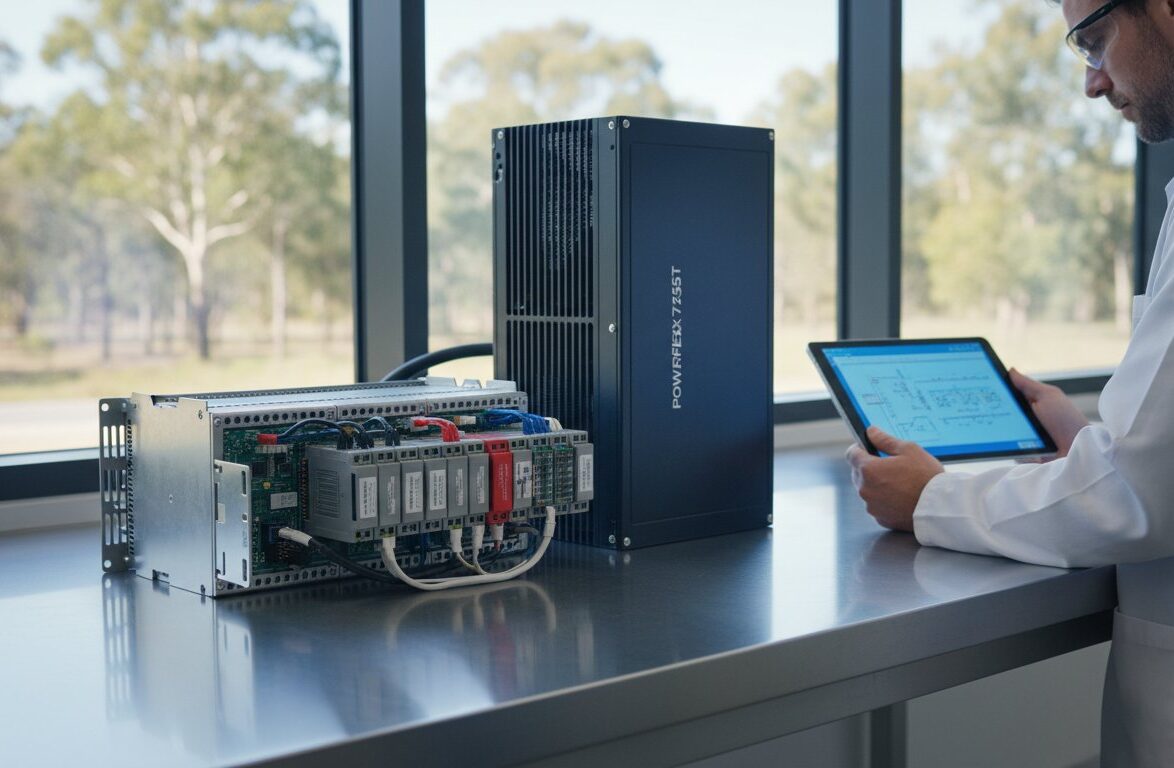
The PowerFlex 525 is the industry workhorse for pumps up to 22kW. It features a modular design and an innovative “PowerCore” that allows you to wire the base while configuring the control module elsewhere. For high-power systems or complex multi-pump arrays, the PowerFlex 755 provides advanced integration and built-in safety features. Check pricing for Allen-Bradley PowerFlex Drives and save on your next project.
Schneider Electric: Altivar Process (ATV600) Series
The ATV600 series is built specifically for fluid management. It includes internal pump-specific functions like anti-clogging and multi-pump lead-lag control without requiring an external PLC. These drives feature integrated power measurement with 97% accuracy. This makes them the primary choice for water and wastewater treatment plants across regional Australia where energy monitoring is mandatory.
Siemens: SINAMICS G120 and G120X
The G120X is a purpose-built infrastructure drive. It’s designed to withstand harsh environments and fluctuating power supplies common in rural Australian grids. Its modular design separates the Power Module from the Control Unit. If a component fails, you only replace the specific module rather than the entire drive. This reduces long-term maintenance costs and downtime for critical irrigation and mining pump stations.
Stop overpaying for your automation hardware. Shop the full range of VFDs at InstroDirect
Sourcing Strategy and ROI: Maximising Your Automation Budget
Australian engineers often face a 30% to 50% “Australia Tax” when purchasing through local authorised channels. InstroDirect eliminates these markups. We use parallel importing to source genuine Rockwell, Siemens, and Schneider Electric hardware from global markets. This allows you to SAVE OVER 40% FROM MANUFACTURER RRP. This vfd selection guide for pumps highlights that hardware cost is the primary barrier to automation. By sourcing independently, you reclaim your budget for other critical site upgrades. We aren’t locked into one brand, giving you the freedom to choose the best tech for your specific application.
This holistic approach to budgeting extends beyond just automation hardware. Managing operational costs for an entire industrial site, including primary energy sources like fuels and oils, is just as critical. To see an example of how independent energy suppliers help facilities manage these costs in other markets, click here.
The Economics of Independent Sourcing
Paying premium prices to authorised distributors is no longer necessary for your facility. We provide unbiased access to the best tech from Allen-Bradley PowerFlex to Siemens SINAMICS. Every part is 100% genuine. We verify serial numbers and firmware versions to ensure compatibility with Australian 415V 50Hz grids. Lower pricing means you can standardise your entire pump fleet faster. Calculate your potential savings with our VSD ROI Calculator to see how much A$ you can save on your next project.
Installation and Post-Sales Support
Direct sourcing allows for significantly lower upfront costs, often reducing payback periods on energy-saving projects by 12-18 months. We provide expert phone support for parameter configuration and commissioning. If you’re replacing a legacy pump drive, we help with cross-referencing specifications. IF YOU CANT FIND IT RING US. Our team excels at sourcing hard-to-find legacy components that traditional distributors have marked as end-of-life. We act as your technical sales arm to keep your plant running. Contact our technical team for a custom quote today.
Selection Checklist: 10 Technical Points to Verify
Before finalizing your purchase from this vfd selection guide for pumps, verify these technical specifications to avoid site failures:
- Motor Full Load Amps (FLA): Always size the VFD based on current, not just kW ratings.
- Overload Rating: Use Normal Duty for centrifugal pumps; Heavy Duty for positive displacement pumps.
- Enclosure Rating: Ensure IP66 for washdown areas or IP20 for ventilated cabinets.
- EMC Filtering: Verify the drive meets Australian C-Tick/RCM requirements for interference.
- Harmonic Mitigation: Check if a DC link choke or line reactor is required for your transformer capacity.
- Communication Protocol: Confirm EtherNet/IP, Profinet, or Modbus TCP integration.
- Cable Length: Install dV/dt filters if the motor is more than 20 metres from the drive.
- Ambient Temperature: Apply de-rating factors if operating above 40 degrees Celsius.
- I/O Requirements: Ensure enough analogue inputs for pressure transducers and flow meters.
- Safety Rating: Verify if Safe Torque Off (STO) SIL3/PLe is required for your risk assessment.
InstroDirect is the primary destination for Australian engineers looking to bypass traditional distribution markups. Shop our range now for the best deals on industrial automation.
Optimise Your Pumping Infrastructure and ROI
Selecting the right drive requires more than a basic power rating. You’ve got to master Affinity Laws and calculate precise torque demands to ensure 100% load compliance. This vfd selection guide for pumps highlights that Australian site conditions demand rugged protection standards to handle heat and dust. Whether you’re spec’ing a PowerFlex 755, an Altivar Process, or a Sinamics G120, your choice shouldn’t be limited by distributor bias. InstroDirect isn’t locked into one brand; we provide the exact technical solution your plant requires. You’ll get genuine Rockwell, Siemens, and Schneider Electric parts without the standard Australian markup.
Stop paying 2024 prices for 2026 technology. Our parallel import model lets you bypass the middleman and secure direct pricing. You’ll access Australian-based technical support and save A$ thousands on major projects. SAVE OVER 40% ON YOUR NEXT DRIVE: Shop the Full VFD Range at InstroDirect. Can’t find what you’re looking for? Ring us directly for immediate technical assistance. It’s time to get your automation budget back under control.
Frequently Asked Questions
What is the difference between a variable torque and a constant torque VFD for pumps?
Centrifugal pumps require variable torque drives because torque demand increases with the square of the speed. Positive displacement pumps need constant torque drives to maintain consistent force across the entire RPM range. Variable torque units typically offer a 110% overload rating for 60 seconds. Constant torque models provide 150% overload protection. InstroDirect stocks both types from major brands like Rockwell and Schneider at lower pricing than official distributors.
Do I need a dV/dt filter for my pump motor?
You must install a dV/dt filter if the cable distance between your VFD and pump motor exceeds 15 metres. Voltage spikes can hit 1600V on standard 415V Australian systems due to reflected wave phenomena. These peaks degrade motor insulation and cause premature failure. High switching frequencies above 4kHz increase this risk. Check the vfd selection guide for pumps on Instrodirect.com.au to find discounted filters for your specific motor lead length.
Is it legal to use parallel imported VFDs in Australian industrial sites?
It’s 100% legal to use parallel imported VFDs under the Australian Competition and Consumer Act 2010. All equipment must still comply with RCM standards and AS/NZS 3000 wiring rules. InstroDirect sources genuine global stock to bypass local distribution markups. You save over 40% from manufacture RRP while receiving the exact same technical hardware used globally. We aren’t locked into one brand, giving you more sourcing options.
How do I calculate the energy savings of installing a VFD on a centrifugal pump?
Use the Affinity Laws where power consumption is proportional to the cube of the shaft speed. Reducing pump speed by 20% drops power demand to 51% of full load. For a 55kW pump running 8,000 hours annually at A$0.25/kWh, a 10% speed reduction saves approximately A$11,000 per year. Instrodirect.com.au provides the hardware to achieve these ROI targets across multiple brands without the high price tag of local agents.
What IP rating is required for a VFD installed outdoors in Australia?
Outdoor VFD installations in Australia require a minimum rating of IP56, though IP66 is preferred for harsh environments. Most standard drives are IP20 and must be housed in a 316 stainless steel enclosure with integrated sun shields. Direct sunlight can increase internal cabinet temperatures by 15 degrees Celsius. We supply standalone IP66 drives and enclosure components at the best prices to handle high ambient temperatures and heavy rain.
Can I use a Rockwell PowerFlex drive with a Siemens motor?
You can definitely use a Rockwell PowerFlex drive with a Siemens motor by entering the nameplate data into the drive parameters. VFDs use standard induction motor control algorithms like Volts per Hertz or Sensorless Vector Control. InstroDirect isn’t locked into one brand. This flexibility allows you to pair a discounted PowerFlex 753 with a high-efficiency Siemens 1LE1 motor to reduce total project costs while maintaining high technical performance.
What is the standard lead time for industrial drives at InstroDirect?
Standard lead time for in-stock industrial drives is 1 to 3 business days for delivery to most Australian locations. We ship directly from our warehouse to minimize your downtime. For specialized high-capacity units, lead times average 7 to 10 days. IF YOU CANT FIND IT RING US WE ARE HERE TO HELP. We prioritize fast, transactional shipping and keep our inventory updated to ensure you get the best deals quickly.
How does the PowerFlex 525 compare to the Altivar 630 for pumping?
The PowerFlex 525 is a modular, compact drive ideal for simple pump tasks up to 22kW. The Schneider Altivar 630 is a dedicated process drive featuring built-in pump curves and advanced energy monitoring. Choosing the right vfd selection guide for pumps depends on your specific control complexity and budget. InstroDirect offers both series at significant discounts, ensuring you get the right technical solution without being forced into a single manufacturer’s ecosystem.</p



Leave a Comment
Your email address will not be published. Required fields are marked *